
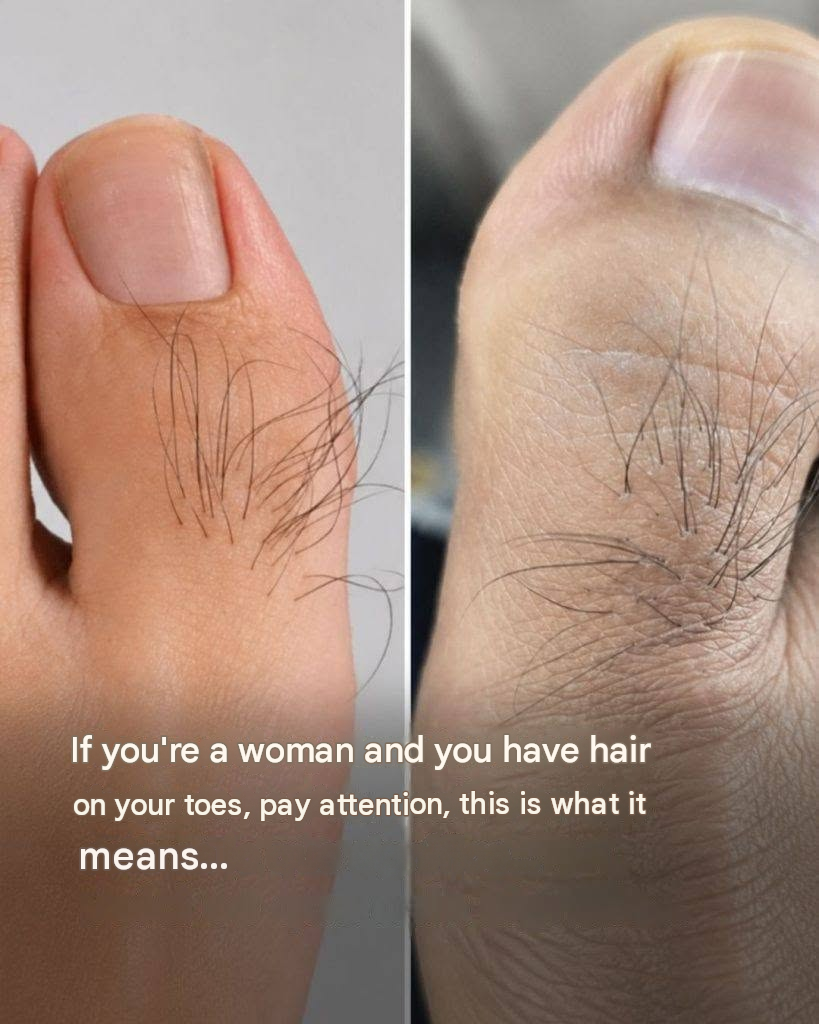
Therefore, the isolated absence of hair does not allow for the diagnosis of peripheral arterial disease.
Doctors evaluate medical history, risk factors, symptoms, leg pulses, and specific tests before establishing a diagnosis.
What may be most relevant is noticing that the hair gradually disappears in an area where it previously grew normally, and that other changes also appear.
Sign number 1: one leg or foot is colder than the other
Touch both feet.
You don’t need to be alarmed if you feel slightly different after sleeping in a certain position or being exposed to air conditioning.
But a persistent difference may warrant attention.
Both the NHLBI and the American Heart Association include a lower temperature in one foot or leg compared to the other among the possible manifestations of reduced blood flow.
When you also notice hair loss, changes in your nails, or discomfort when walking, the whole becomes more important than any of those signs separately.
Sign number 2: Leg pain when you walk
This is one of the classic characteristics of peripheral arterial disease.
It may feel like:
Cramps.
Heaviness.
Burning.
Pain.
Tiredness in the legs.
Discomfort in calves, thighs, buttocks or ankles.
The characteristic feature is that it appears when walking, climbing stairs, or exercising and improves after resting. This phenomenon is known as intermittent claudication.
Why does this happen?
When you are at rest, your muscles need relatively little blood.
When you start walking, they need much more.
If an artery is sufficiently narrowed, it may not increase the flow as needed, and then discomfort appears.
Not everyone with peripheral artery disease experiences the typical pain when walking. Some have different symptoms, and others may not have any obvious symptoms.
That’s why simply looking at the pain isn’t enough either.
Sign number 3: wounds that take too long to heal
A small cut on a finger, a blister caused by a shoe, or a wound on the foot should normally progress towards healing.
When an injury remains open for a long time, worsens, or seems not to heal, it should receive attention.
Wounds on fingers, feet, or legs that heal very slowly or do not heal are among the recognized signs of peripheral arterial disease.
This is especially important for people with diabetes, because diabetes significantly increases the risk of peripheral artery disease and can also affect sensation in the feet. The American Heart Association notes that people with diabetes and smokers are among the groups at highest risk for PAD.
Never ignore a wound that is not healing properly.
Sign number 4: changes in skin color or appearance
Poor circulation can also alter the appearance of the legs and feet.
Pale, bluish, or discolored areas may appear depending on the position of the leg and the severity of the problem.
The skin may appear brighter and the nails may grow slowly.
Here again we find the importance of observing several signals together.
Less hair.
Brighter skin.
Nails that grow slowly.
persistently cold feet.
A wound that does not heal.
Pain when walking.
A single one of these characteristics can have different explanations.
Several boards deserve a professional evaluation.
Why should women pay special attention?
Peripheral arterial disease is not exclusive to men.
It affects both men and women and can go unnoticed when symptoms are mild or simply attributed to tiredness, age, or muscle problems.
The American Heart Association notes that women can develop PAD and share risk factors such as age, family history, diabetes, smoking, high blood pressure, and high cholesterol.
Therefore, the message should not be:
“Women without hair on their fingers have poor circulation.”
It should be:
“Changes in the feet can provide information and should not be ignored when they appear alongside other symptoms or risk factors.”
Who is at higher risk of peripheral artery disease?
The main factors include smoking or having smoked and having diabetes.
They also increase the risk:
Advanced age.
High blood pressure.
High cholesterol.
Heart disease.
History of stroke.
MedlinePlus identifies smoking as one of the main risk factors and also notes diabetes, advanced age, high cholesterol, hypertension, heart disease, and a history of stroke.
The American Heart Association particularly highlights smoking and diabetes as two of the most important risk factors.
This means that a change in hair growth may be more relevant in a 60-year-old woman with diabetes and a history of smoking than in a healthy young woman who has simply never had visible hair on her fingers.
Context matters.
How does a doctor check for poor circulation?
Diagnosis is not made by simply looking at the hair.
The practitioner may begin by reviewing the symptoms and medical history, examining the skin, and feeling the pulses in the legs and feet.
One of the most commonly used tests is the ankle-brachial index, known as ABI.
It is a non-invasive test that compares blood pressure measured at






Comments