
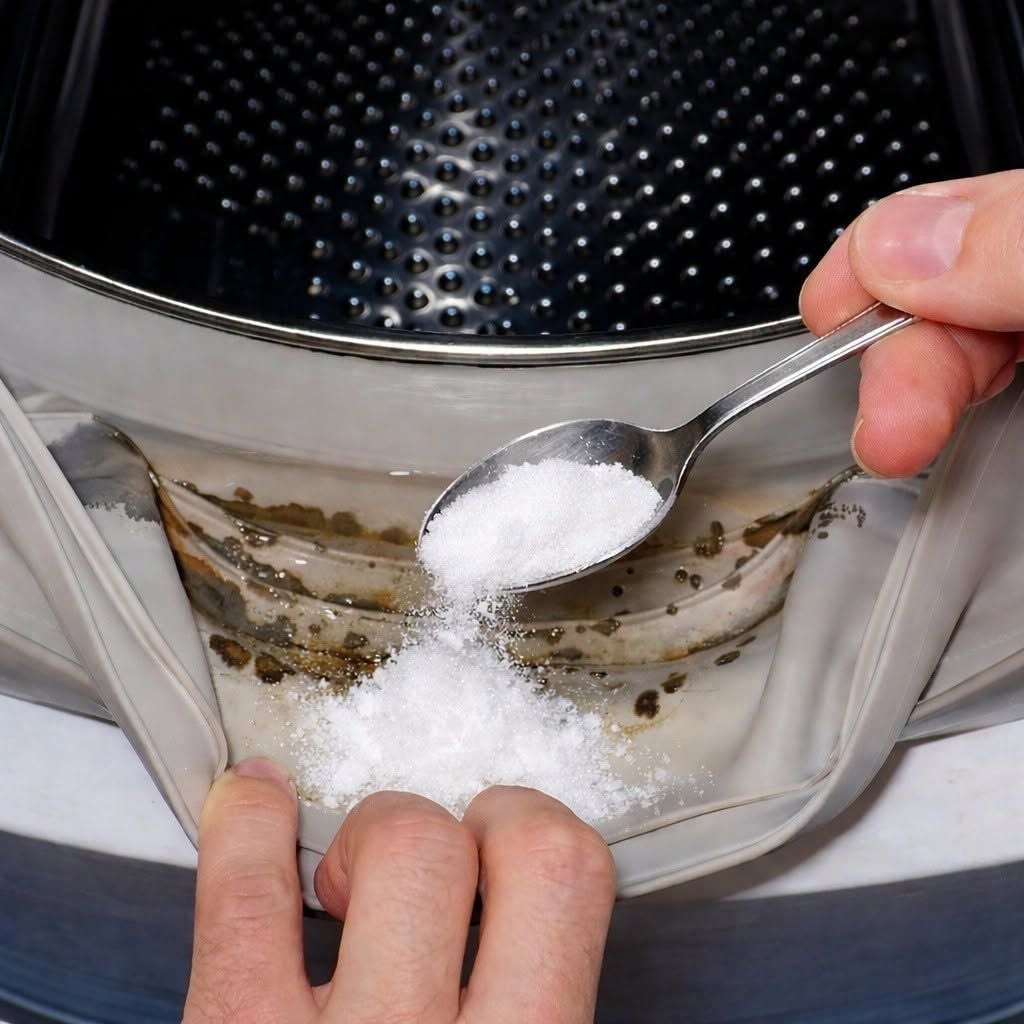
The safest rule is simple: check your washing machine’s manual before putting citric acid, vinegar, bleach, or any other cleaning chemical inside the machine.
Why Does a
Washing Machine Smell Bad?
A musty washing machine smell is not necessarily caused by limescale.
In many cases, the problem is caused by a combination of moisture and residue.
Common causes include:
Excess detergent
Fabric-softener residue
Dirt, body oils, and skin particles
Moisture trapped inside the rubber door gasket
Lint and hair
Frequent low-temperature washing
Buildup inside the detergent drawer
Water remaining in filters, hoses, or other areas
On front-loading washing machines, the rubber gasket around the door is one of the most common problem areas.
Moisture, hair, lint, and detergent residue can collect inside the folds of the gasket. If the area remains damp, it can contribute to musty odors and microbial growth.
Samsung recommends cleaning the door gasket regularly and allowing it to dry thoroughly.
Citric Acid, Baking Soda, and Vinegar: What Do They Actually Do?
These household products work differently, and they should not be treated as interchangeable.
Citric Acid
Citric acid is acidic and can dissolve mineral deposits such as limescale.
That makes it potentially useful for descaling—but only when the washing machine manufacturer allows it.







Comments