
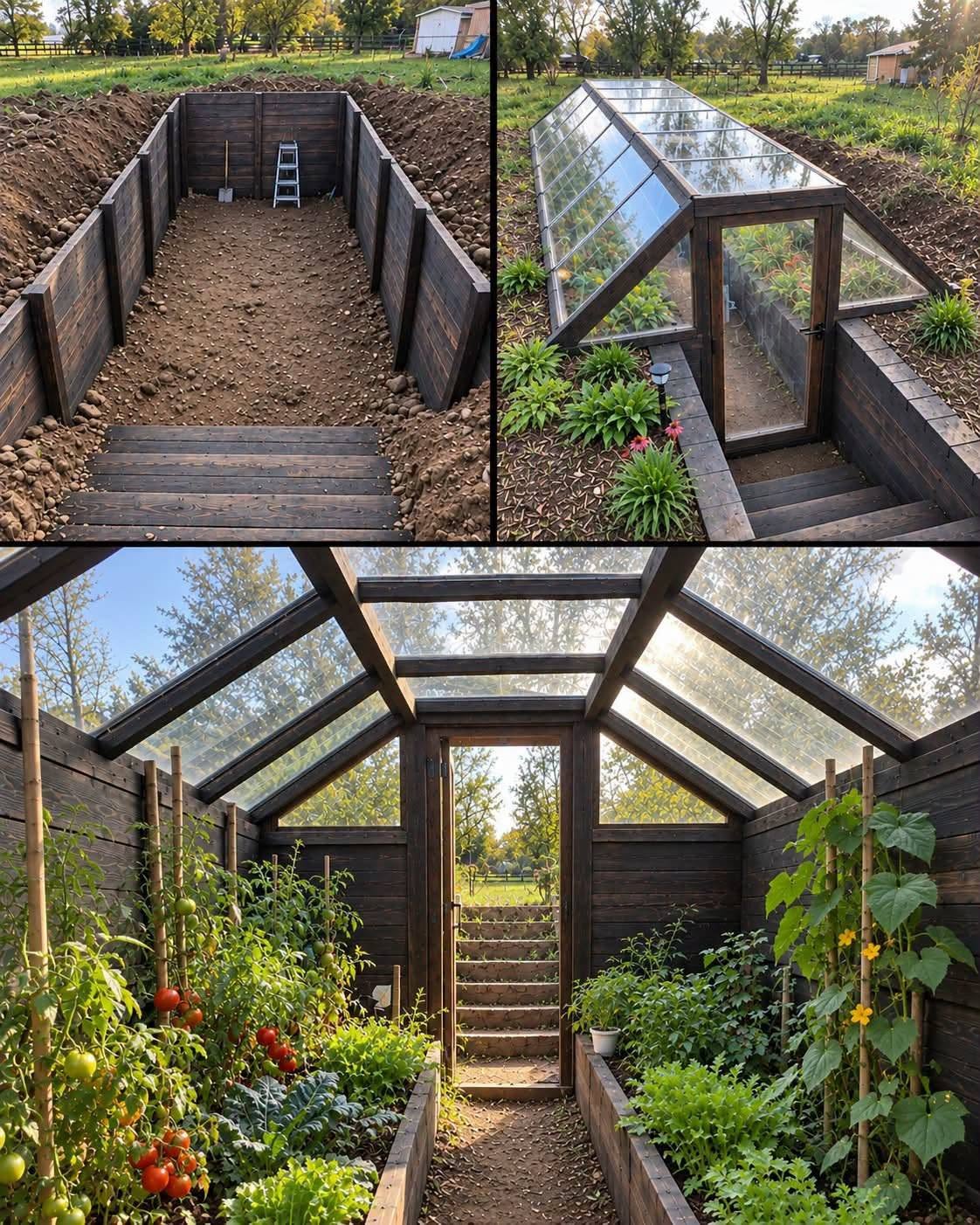
Stable Temperatures All Year
Below about 1.5–2 meters, soil temperature remains relatively constant throughout the year. While air temperatures may drop far below freezing or rise sharply in summer, the ground stays cool in hot months and warm in winter. This creates a naturally
regulated growing environment.
Lower Heating Costs
Traditional greenhouses often require heaters during winter. A walipini dramatically reduces or eliminates this need because the surrounding earth acts as a thermal battery, storing heat during the day and releasing it slowly at night.
Protection from Wind and Storms
Being mostly underground means your structure is shielded from strong winds, hail, heavy snow, and storms. This reduces damage and extends the lifespan of the greenhouse.
Longer Growing Season
In many climates, you can grow vegetables 10–12 months of the year, even when outdoor
gardening is impossible.
Water Efficiency
Lower wind exposure and stable temperatures reduce evaporation, meaning plants require less frequent watering.
Sustainable and Eco‑Friendly
Walipinis rely on passive solar heating rather than fossil fuels, making them one of the most environmentally friendly greenhouse designs available.
Food Security
With year‑round production, you become less dependent on external food supply chains and seasonal limitations.
How a Walipini Works (Simple Explanation)
A walipini uses three natural principles:





Comments