
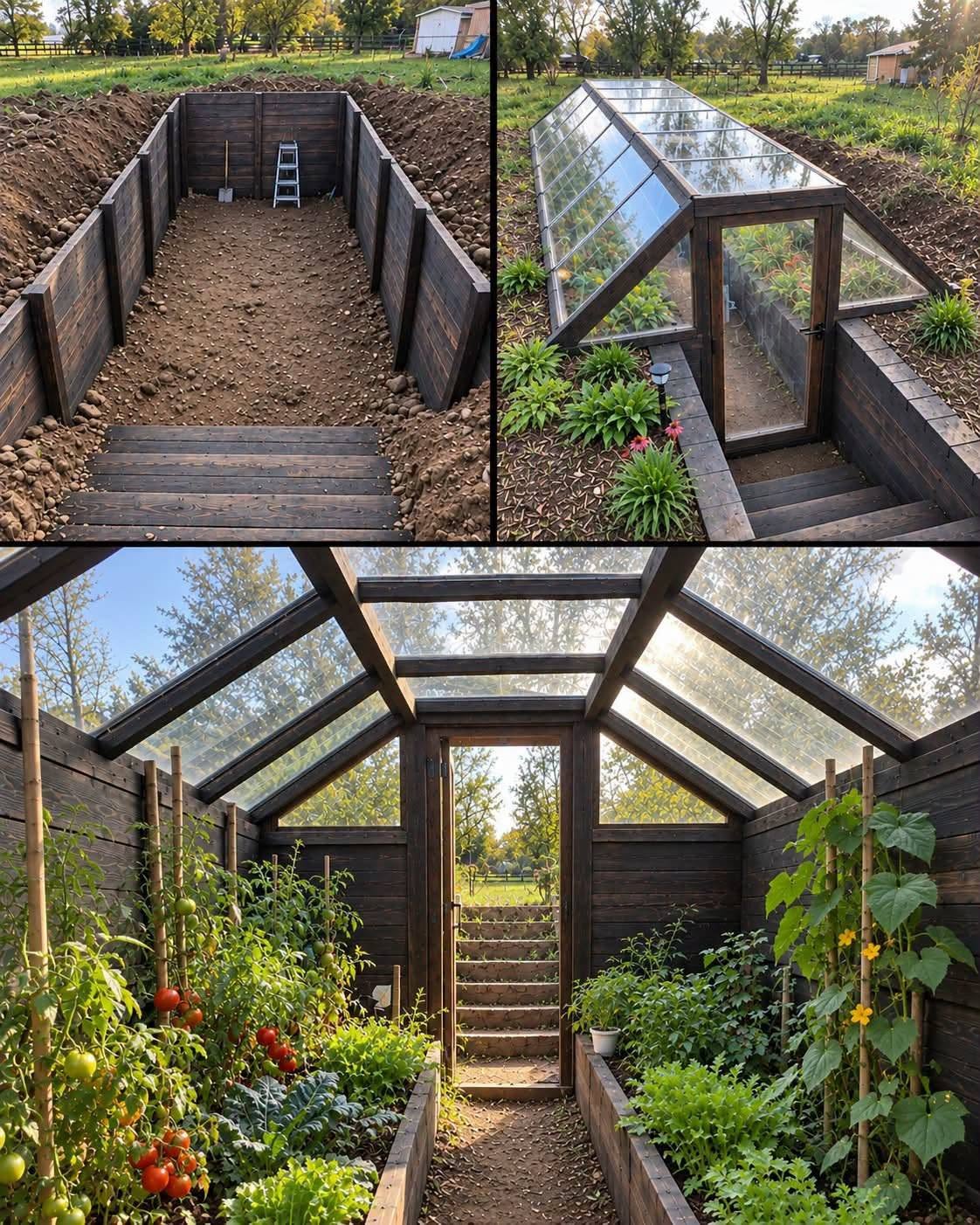
Thermal mass – the soil absorbs and stores heat.
Solar gain – sunlight enters through a transparent roof.
Insulation – underground
walls prevent heat loss.
During the day, sunlight warms the interior and surrounding soil. At night, that stored heat is slowly released, keeping plants warm even when outdoor temperatures drop.
Choosing the Right Location
Before building, selecting the correct spot is critical.
Ideal conditions:
Good drainage (avoid flood‑prone areas)
South‑facing slope or open southern exposure (in the Northern Hemisphere)
Away from large trees and roots
Low water table
Easy access to water
If your soil becomes waterlogged after rain, consider installing drainage or choosing higher ground.
Basic Design Principles
Depth
Most walipinis are dug 1.8 to 2.5 meters (6–8 feet) deep.
Orientation
The roof should face the sun:
South‑facing in the Northern Hemisphere
North‑facing in the Southern Hemisphere
Roof Angle
The transparent roof should be angled between 30° and 45° to maximize winter sun exposure.
Shape
A long rectangular shape is easiest to build and manage.





Comments