
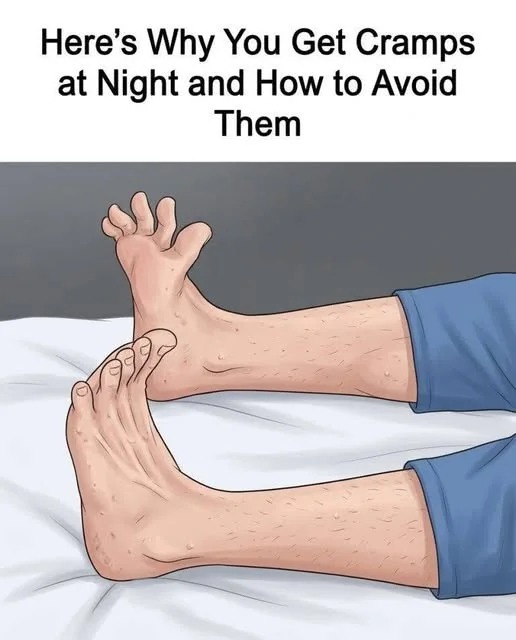
Muscle Fatigue and Overuse
Standing for long periods, walking extensively, exercising intensely, or performing unfamiliar physical activities can fatigue your muscles.
Fatigued muscles may become more susceptible to involuntary contractions, particularly when you are resting.
Age-Related Changes
Nighttime leg cramps become more common with age.
Changes in muscle
function, nerve activity, flexibility, and physical activity may contribute. Older adults may also be more likely to take medications or have medical conditions associated with muscle cramps.
Dehydration
Not drinking enough fluids can affect normal muscle function, especially when dehydration is significant.
People who sweat heavily, exercise in hot weather, or experience vomiting or diarrhea may be more vulnerable.
However, dehydration is not the explanation for every nighttime cramp.
Electrolyte
Imbalances
Minerals such as magnesium, potassium, calcium, and sodium help regulate muscle and nerve activity.
Significant imbalances can contribute to muscle problems, including cramps. However, ordinary nighttime cramps do not
automatically mean that you are deficient in magnesium or potassium.
Taking supplements without knowing whether you need them is not necessarily helpful and can sometimes be harmful.
Certain Medications
Some medications have been associated with muscle cramps, including:






Comments