
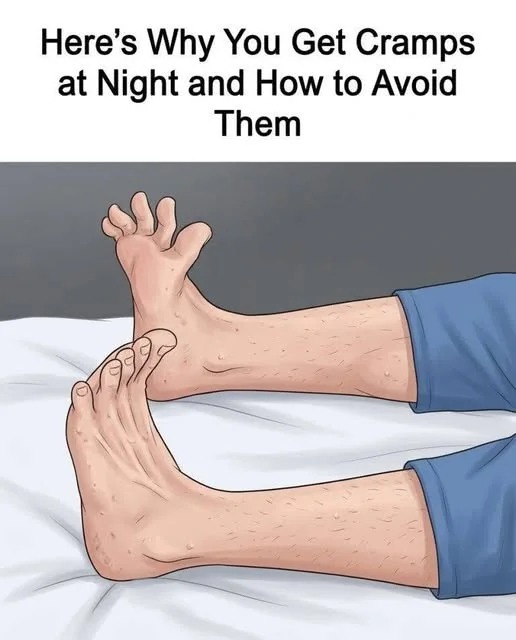
Certain diuretics used to manage blood pressure or fluid retention.
Some cholesterol-lowering medications, particularly statins.
Certain asthma medications.
Some medicines used to treat neurological conditions.
A medication may contribute to symptoms, but cramps can also have unrelated causes.
If you suspect a prescription is responsible, discuss it with your healthcare professional. Never stop a prescribed medication without medical advice.
Underlying Health Conditions
Frequent cramps can sometimes occur alongside certain medical conditions, including:
Diabetes and peripheral nerve damage.
Kidney disease.
Thyroid disorders.
Peripheral artery disease.
Certain neurological conditions.
Having nighttime cramps does not mean you necessarily have one of these conditions. A medical assessment is useful when cramps are persistent, severe, or accompanied by other symptoms.
- How to Stop a Leg Cramp When It Happens
When a cramp wakes you up, the first priority is to gently relax the contracted muscle.
Here are several practical steps.
Stretch Your Calf Muscle
This is often the most useful immediate technique.
If your calf cramps:
Straighten





Comments