
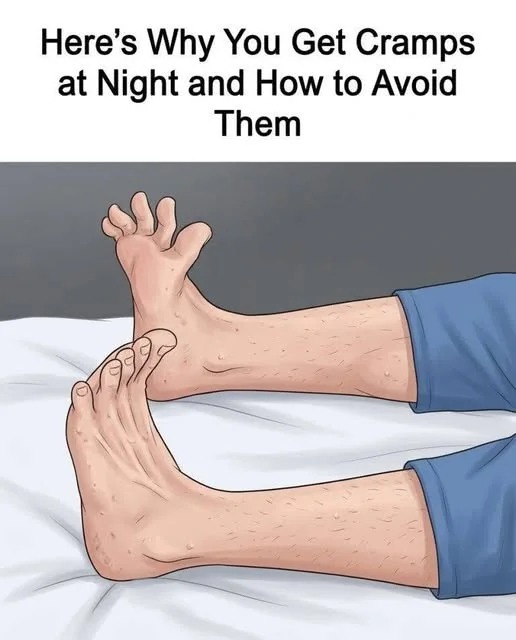
the affected leg if possible.
Gently pull your toes toward your head.
Keep your knee straight without forcing the movement.
Hold the stretch until the muscle begins to relax.
Repeat gently if necessary.
If you can stand safely, placing your feet flat on the floor and leaning gently toward a wall may also stretch the calf.
Avoid sudden or forceful movements.
Massage the Affected Muscle
Gently rubbing or massaging the tight muscle may help it relax.
Use comfortable pressure rather than pressing hard into a painful area.
Apply Gentle Heat
A warm towel, warm shower, or heating pad on a
low setting may help relax a tight muscle.
Protect your skin from burns, especially if you have reduced sensation in your feet or legs.
Walk Carefully
Once the pain begins to ease, standing and taking a few gentle steps may help relieve the remaining tightness.
If the pain is severe or you feel unsteady, remain seated until you can move safely.
- Seven Ways to Reduce Nighttime Leg Cramps
There is no guaranteed way to prevent every cramp, but certain habits may reduce their frequency. - Stretch Before Going to Bed
Gentle calf stretching before sleep may help some people who experience
- recurring nighttime cramps.
Try this simple stretch:
Stand facing a wall.
Place both hands against it.
Move one leg behind you.
Keep the back heel on the floor and the knee straight.
Bend the front knee until you feel a gentle stretch in the back calf.
Hold for about 20–30 seconds.
Repeat on the other leg.
Do not bounce or stretch into pain.
- Stay Properly Hydrated
Drink fluids regularly throughout the day, particularly when exercising or spending time in hot weather.
You do not need to drink excessive amounts of water before bedtime. Doing so may simply increase nighttime bathroom
trips.
People with heart or kidney conditions who have fluid restrictions should follow their clinician’s advice.
- Eat a Balanced Diet
A varied diet helps provide the minerals and nutrients your muscles need.
Foods containing potassium include:
Bananas.
Potatoes.
Beans and lentils.
Avocados.
Leafy green vegetables.
Magnesium-rich foods include:
Almonds and other nuts.
Pumpkin seeds.
Whole grains.
Beans.
Spinach.
Calcium can be obtained from dairy products, fortified alternatives, and certain leafy vegetables.
These foods support overall nutrition, but eating a banana or taking magnesium is not a guaranteed treatment for nighttime cramps.
- Avoid Sudden Increases in Exercise
If you suddenly increase
- your walking distance, exercise intensity, or time spent standing, your muscles may become fatigued.
Increase activity gradually and allow enough time for recovery.
Gentle movement during the day can also help maintain muscle flexibility and strength.
- Choose Comfortable Sleeping Positions
Some people notice cramps when their feet remain pointed downward for extended periods.
Try keeping your feet in a relaxed, neutral position rather than allowing your toes to point downward for long periods.
Comfortable bedding and avoiding excessive pressure on your feet may also help.
- Review Your Medications
If nighttime
- cramps began after starting a new medicine or changing a
- dose, mention the timing to your healthcare professional.
A medication review may help identify possible side effects or interactions.
Do not discontinue blood pressure medication, statins, or diuretics on your own.
- Maintain Regular Physical Activity
Walking, gentle stretching, and appropriate strengthening exercises can help maintain muscle function.
If you have circulation problems, nerve damage, or a chronic medical condition, ask your healthcare professional which activities are appropriate.
- Should You Take Magnesium for Nighttime Leg Cramps?
Magnesium supplements are frequently advertised
- as a solution for nighttime cramps.
Magnesium is important for normal muscle and nerve function, and correcting a genuine deficiency
is important.
However, research has not consistently shown that magnesium supplements significantly prevent ordinary nighttime leg cramps in most adults, particularly older adults.
Supplements can also cause diarrhea and abdominal discomfort. In people with impaired kidney function, excessive magnesium can accumulate and become dangerous.
It is better to discuss persistent cramps with a healthcare professional before starting a supplement.
- When Should You Be Concerned About Leg Cramps?
Most occasional nighttime
- cramps are not dangerous. However, certain symptoms deserve medical attention.
Arrange a medical evaluation if:
Cramps occur frequently and regularly interrupt your sleep.
The pain is severe or does not
improve with stretching.
You experience persistent muscle weakness.
You notice numbness or tingling.
You have unexplained swelling.
Cramps started after a medication change.
You also experience unusual fatigue or other unexplained symptoms.
Important warning: Sudden swelling, warmth, redness, and pain in one leg may indicate a blood clot rather than an ordinary muscle cramp. Seek urgent medical assessment. If this is accompanied by sudden shortness of breath, chest pain, or coughing up blood, seek emergency care immediately.
Coldness, unusual paleness, severe pain, or sudden loss of sensation in a leg or foot also requires urgent assessment.
- Are Nighttime Leg Cramps
- a Sign of Poor Circulation?
Not necessarily.
Many people assume that every nighttime cramp means their blood is not circulating properly. In reality, ordinary nocturnal cramps often occur without a serious circulation problem.
Peripheral artery disease can cause leg discomfort, particularly during walking. The pain often improves with rest. Other






Comments