
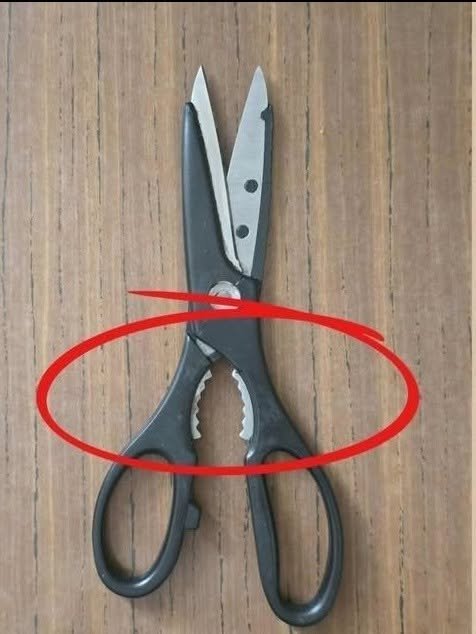
The Anatomy of Kitchen Shears: More Than Just Scissors
To understand why the toothed section exists, you must first appreciate the anatomy of kitchen shears. They are not the same as the flimsy office scissors you used in grade school. Every element of their construction is engineered for food preparation and heavy-duty tasks.
The Blades: Serrated vs. Smooth
Most high-quality kitchen shears feature a combination of blades. Typically, one blade is sharp and smooth, while the other is micro-serrated. This combination is a deliberate design choice. The serrated edge acts as a set of “teeth” that grip slippery materials—such as raw chicken skin, tomatoes, or fresh fish—preventing them from sliding forward as you cut. The smooth blade then slices cleanly through the material, ensuring a precise and safe cut.
The Pivot
The pivot is the screw or rivet that holds the two halves of the shears together. It acts as the fulcrum, the point upon which the entire lever system balances. The pivot provides the immense leverage needed to cut through tough materials like poultry bones, cardboard, or thick packaging.



Comments